
What OpenAI announced
OpenAI introduced the Agents API in public beta, exposing a managed Codex-style harness for long-running work. Developers can use OpenAI-hosted sandboxes, their own infrastructure or partner environments. The API manages long context, tool discovery and calls, and can coordinate subagents. OpenAI says the harness has an open-source foundation and that the managed API adds no separate platform fee beyond the tokens and tools used.
For a mobile team, the important change is not that an app can send another prompt. It is that work can continue asynchronously, use several tools and produce intermediate state that must be presented, paused, retried or approved safely.
Keep the agent behind a server boundary
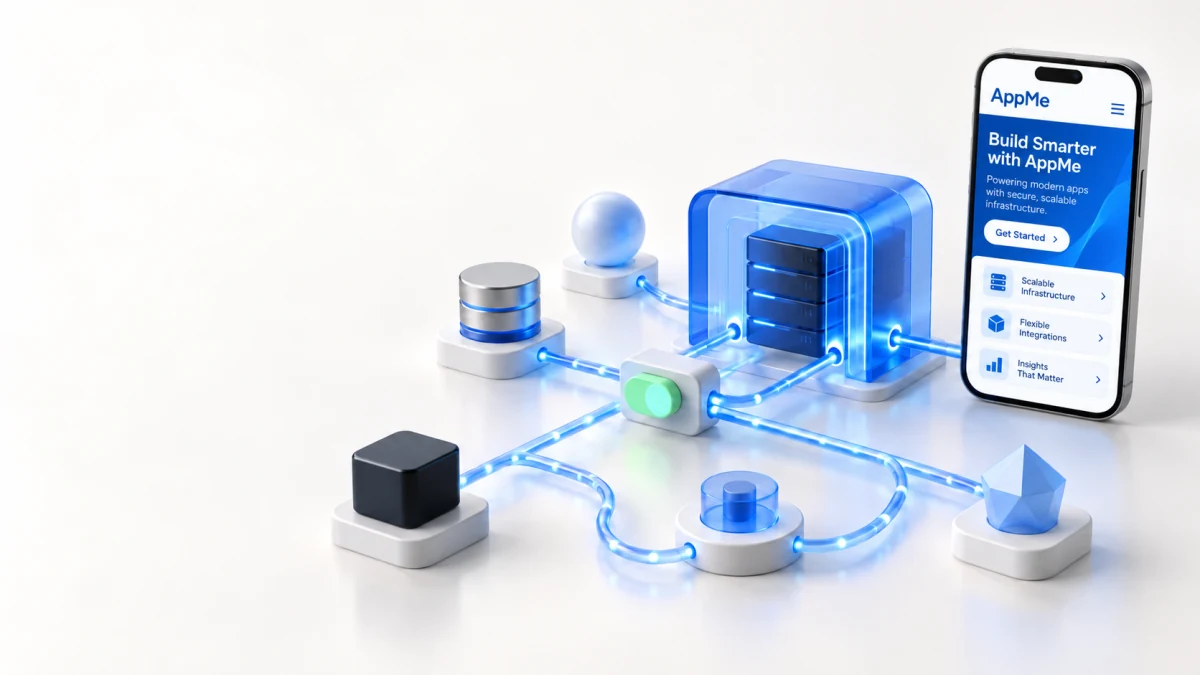
The mobile application should authenticate to an AppMe-controlled backend. That backend creates the agent task, attaches the minimum tools and data, stores the task identifier and returns a safe status model to the device. Provider credentials and privileged tool secrets do not belong inside the mobile binary.
The app can then subscribe or poll for progress, render intermediate output and let the user cancel. The backend remains responsible for access control, rate limits, audit records and mapping a provider task to the correct product account.
Five decisions before a production pilot
First, choose synchronous versus asynchronous interaction from the time a user can reasonably wait. Second, classify tools as read-only or state-changing. Third, make writes idempotent so retries do not create duplicate orders, messages or records. Fourth, define the audit trail. Fifth, set per-task budgets and a safe stop condition.
- Require human approval immediately before an external write or purchase.
- Show what data and tools a task will use before it starts.
- Allow cancellation without losing already confirmed user work.
- Store tool results separately from conversational presentation.
- Design a fallback when the agent or one dependency is unavailable.
A mobile interaction model
A useful mobile agent flow has four visible states: a clear request, an execution plan, progress with cancellable steps, and a result that identifies completed versus proposed actions. Hiding long execution behind a spinner removes the context users need to trust the result.
Notifications can announce completion, but opening the notification should deep-link to the task record rather than silently performing another action. If a task requires approval, the approval should expire and display the exact external effect.
| Lifecycle stage | Mobile experience | Backend control | Failure or recovery rule |
|---|---|---|---|
| Request | Show the user’s objective, selected data and whether any external action may occur. | Authenticate the product account, validate scope and create an idempotent task identifier. | Reject ambiguous or unauthorized scope before creating provider work. |
| Plan | Present the proposed steps, tools and data sources in understandable language. | Attach only the minimum permitted tools and set task limits and a stop condition. | Require a new plan when scope or required permissions change. |
| Execution | Display durable progress and a working cancel control instead of an indefinite spinner. | Keep provider credentials server-side; record tool calls, timeouts and retry state. | Retry only idempotent work and retain confirmed user work when a dependency fails. |
| Approval | Name the exact external write, destination and consequence before confirmation. | Pause execution, verify the current account and expire stale approvals. | Never infer approval from an earlier message or a notification open. |
| Completion | Separate completed actions from proposals and link back to the persistent task record. | Store tool results separately from presentation text and close unused permissions. | Make status retrieval safe to repeat after reconnecting or changing devices. |
| Cancellation or failure | Explain what stopped, what was preserved and which next actions are safe. | Stop pending tools, mark partial effects and expose a controlled resume path. | Do not repeat state-changing calls unless their prior outcome is known. |
Where a pilot can start
Good pilots have a bounded source set and a reversible outcome: preparing a support response for review, classifying product feedback, assembling a release checklist or researching an internal question with cited sources. A pilot should measure completion quality, human correction, latency, cancellation and cost—not only whether a response looks fluent.
Because the Agents API is in public beta, teams should isolate the provider integration behind their backend and expect the operational contract to evolve before general availability.
Primary sources
Facts are grounded in the official announcements below. AppMe analysis and recommendations should be validated against the product being changed.